In that context, the International Finance Corporation (IFC), through the implementation of the Vietnam Resource Efficiency Improvement (VIP) project with the support of the Clean Technology Fund (CTF) and the Korea Green Growth Trust Fund has helped Vietnamese textile manufacturers save water and energy consumption. This has helped the Vietnamese textile and garment industry to implement cleaner production solutions, improve productivity and product quality while also improving and enhancing the prestige and brand name of Vietnamese textile and garment products on the market. domestic and international.
Kyle Kelhofer, IFC Country Director for Vietnam, Cambodia and Laos, said improvements to improve resource efficiency across the textile and apparel industry provide a good opportunity for Vietnam to develop a Sustainable way, bringing positive results right from the initial stage of launching resource saving measures.
The Vietnam Resource Efficiency Enhancement Program (VIP) was launched in 2015 with funds of up to 9.9 million implemented in 28 enterprises and factories throughout the country to outsource to the VF Group and Target Group.
Water and power saving solutions focus on cutting, sewing, dyeing, printing and laundry. After 18 months of implementation, businesses have reduced their consumption of water and energy materials by more than 20% to about $ 15 million.
Regarding logistics costs, according to a recent report by the Vietnam Chamber of Commerce and Industry (VCCI), this expense still accounts for a high proportion in the cost structure of enterprises, and textile and garment enterprises are not avoided. from this.
For example, the cost of shipping a container from Haiphong to Hanoi, or vice versa (about 100km), is three times more expensive than the cost of shipping one container from China and Korea to Vietnam. Male. In addition, there are additional costs associated with administrative procedures, payment of fees, time delays, increased petrol prices, additional shipping costs.
So, once labor costs do not fall, logistics costs and associated costs are still high and do not know when to reduce, the priority choice that garment enterprises need to do now is to have Solutions to reduce production costs.
Back to the program to reduce production costs for Vietnam textile and garment enterprises, discussed with the Business Times, Navneet Chadha, IFC experts, said that to date, 28 domestic textile and garment enterprises Support options have been implemented for nearly 100 solutions, including low-cost solutions and cost-effective solutions, with an investment of nearly $ 10 million for these solutions but a return on savings. $ 15 million with payback period in only eight months.
In the near future, IFC will work with other leading global brands to promote efficient use of resources and to increase clean energy exploitation and use in the supply chain in Vietnam. Vietnamese garment enterprises will have more opportunities to cut waste in production and improve business efficiency.
With the early achievements of the Vietnam Resource Efficiency Improvement (VIP) program, it has brought about practical effects for Vietnamese garment enterprises. It is expected that the textile and garment industry will reach US $ 31.3 billion, a year-on-year increase of 10.9%.
|
The Clean Technology Fund (IFC), a member of the World Bank Group, is the largest global development organization focused on supporting the private sector in emerging economies, supporting more than 2,000 private businesses around the world. In the fiscal year 2016, IFC's long-term investment in developing countries reached a record $ 19 billion, helping the private sector play an important role in the global effort to eradicate poverty. Extreme and promote common prosperity.
|
CPSI Office




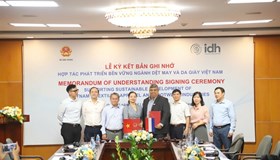 MoU on sustainable development for textiles and footwear signed
 Vietnam - UK cooperate for sustainable development
 Vietnam, Japan sign a Memorandum of Understanding on low-carbon growth
 Increasing solutions in response to climate change
 Realizing vision towards sustainable green agriculture development
 WWF-Vietnam calls to reduce plastic waste
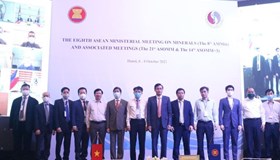 Promoting ASEAN cooperation towards sustainable development of mineral exploitation
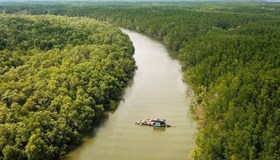 Developing forests in coastal areas in response to climate change