Yvonne Blos, Energy and Climate Change Coordinator for Asia at the Friedrich Ebert Institute (FES) in Vietnam, said in recent years, energy and climate change is being paid special attention by nations around the world.
"Energy issue is not a single sector but involves many interdisciplinary elements, so we can not unilaterally address energy issues, climate change, organizations, countries. , the areas must work together to solve, "Yvonne Blos emphasized.
The Institute of Friedrich Ebert is an organization that promotes fairness and solidarity in society to tackle aspects of climate change. "We promote, move in the energy structure, to help us have ways of developing energy, boosting GDP growth, combining programs, mobilizing resources for sustainable development of energy as well as limiting the hazards to this area, "said Yvonne Blos.
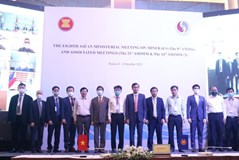
At the conference, research on energy transformation was shared by countries such as China, India, Indonesia, Japan, Philippines, Korea, Thailand and Vietnam. This will be a source of information to provide policymakers and investors to showcase sustainable energy development paths in the region.
Dr. Dang Thi Thu Hoai, Central Institute for Economic Management (CIEM), said that over the past few years, Vietnam's demand for energy has increased sharply. In the period 2010-2015, GDP has increased by 6%, while annual electricity growth is 11.5%.
Vietnam has issued many policies on energy, green development and climate change, but poorly implemented; The expectations for renewable energy are low, and the electricity sector is heavily dependent on coal. On the energy market, almost monopoly by state-owned enterprises; The indirect subsidies for fossil fuels are still taking place.
Towards a shift in energy structure and ensurement of social justice in Vietnam, Dr. Dang Thi Thu Hoai, proposed to implement four policy groups:
Firstly, change of perception, requires a more up-to-date, broader and longer-term vision.
Second, institutional reform, increased competition, reduced subsidies, increased transparency of state-owned enterprises, increased local government responsibilities, and increased conditions for centralized investment on nergy efficiency and renewable energy.
Third, encourage and promote the development of renewable energy and the efficient energy consumption: incentives for investors, consumers and local government.
Fourth, build capacity in the renewable energy sector, energy efficiency and banking.
CPSI office




 MoU on sustainable development for textiles and footwear signed
 Vietnam - UK cooperate for sustainable development
 Vietnam, Japan sign a Memorandum of Understanding on low-carbon growth
 Increasing solutions in response to climate change
 Realizing vision towards sustainable green agriculture development
 WWF-Vietnam calls to reduce plastic waste
 Promoting ASEAN cooperation towards sustainable development of mineral exploitation
 Developing forests in coastal areas in response to climate change