The garment industry is a spearhead industry in Vietnam's export development. At present, there are about 1,000 garment businesses growing at a rate of more than 10 percent per year. It is estimated that with export revenue of US$10 billion, the garment industry will maintain a leading position in the national economy.
However, the industry has not been without difficulties such as small-scale production and archaic technologies leading to high production expenses and low profits. According to Nguyen Ba Vinh, the project manager of the Promoting Energy Conservation in Small and Medium-Sized Enterprises (PECSME) project, in order to lower production expenses and raise competitiveness, businesses should apply solutions, of which energy conservation is one of the most effective and efficient methods. If energy conservation methods are effectively implemented, garment businesses can save 20 percent energy consumption.
Energy conservation methods can be applied in all production stages, from steam boiler systems, air compressors, and engines to lighting and water supply systems. Advantages of these methods include simplicity in implementation, lowering investment capital and faster repayment of loans.
Specifically, to save energy in the steam boiler process, it is necessary to use suitable capacity boilers and avoid low-load situations. In addition, a steam distribution system should be installed to reduce heat leaks during the steam distribution process. Moreover, the steam boiler system should be regularly cleaned to remove deposits in the system. Vaporized water can be used as water provided for boilers. Heat of exhaust gas can be utilized for other liquids such as water supplied for boilers and fuel oils (FO). Regarding material, there is a need to control quality. Also, businesses should pay special attention to study the transition of FO to other fuels to reduce production expenses and harmful releases into the environment.
Apart from steam boilers, businesses can conserve energy in their air compressor systems. Air compressors should be high efficiency and have a suitable capacity. They should be regularly maintained to avoid air leaks as well as ensuring proper air pressure.
In terms of engines, to save energy, they also should have a suitable capacity, high efficiency and be regularly maintained. Low load engines such as steam boiler fans, aspirators, pressure oil pumps and stranders should have an inverter or electricity-control devices.
Most garment businesses can apply energy conservation methods in their lighting system, such as utilizing natural light in production, using compact fluorescent light bulbs and properly arranging light bulbs and switches. These methods both ensure lighting demands and help save energy.
Furthermore, businesses can save water, heat and chemical substances by recovering and recycling high temperature waste water from dyeing machines. Water pipes should be regularly checked to avoid water leaks and waste.
These methods can be implemented at low cost and investment can be quickly recouped, but most of all they bring positive results to garment businesses. As an example, the Tin Thanh Weaving and Dyeing Factory in Duong Noi Commune, Ha Dong District, Hanoi, invested VND100 million into energy conservation methods such as recovering vaporized water and steam, improving their lighting system, optimizing the operation of their air compressor and managing the additional charge system. Within one year, the business saved 60 tonnes of coal, reduced a large amount of CO2 (carbon dioxide) emissions and conserved 30,000KWh of electricity. With suitable investment capital, businesses can lower production expenses, increase profits and reduce their adverse impacts on the environment, thereby making a significant contribution to the national campaign of energy conservation./.




 MoU on sustainable development for textiles and footwear signed
 Vietnam - UK cooperate for sustainable development
 Vietnam, Japan sign a Memorandum of Understanding on low-carbon growth
 Increasing solutions in response to climate change
 Realizing vision towards sustainable green agriculture development
 WWF-Vietnam calls to reduce plastic waste
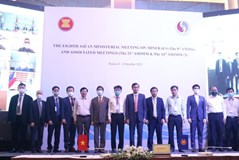
 Promoting ASEAN cooperation towards sustainable development of mineral exploitation
 Developing forests in coastal areas in response to climate change