Most companies that manufacture or use packaging accept that they need to produce and use it in ways that are environmentally, economically and socially responsible. This case study outlines the nature of that challenge and shows how the packaging industry has itself created a body that works to encourage responsible attitudes towards packaging in modern society.
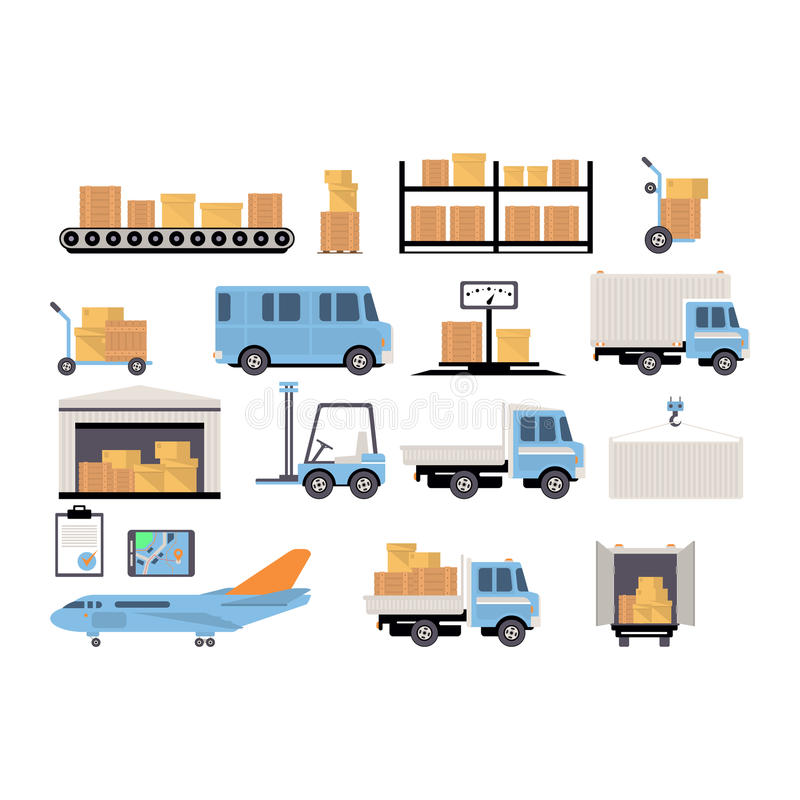
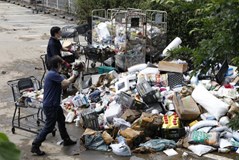
Packaging’s various roles – ensuring that goods survive the hazardous journey through the distribution chain and enabling efficient handling of goods, which in turn helps keep costs to consumers down – are usually taken for granted. Packaging is a significant fraction – between 20% and 25% by weight – of municipal solid waste, which is largely household waste. What the consumer does not see is that household dustbin waste makes up less than 20% of the total solid waste from all sources sent to landfill in a typical European country. Landfill is dominated by industrial, demolition and construction waste. Household packaging accounts for less than 5% by weight or volume.
Formation and role of INCPEN
Rather than respond to these issues individually, companies in the packaging sector decided to set up a joint body,The Industry Council for Packaging and the Environment (INCPEN) to carry out research into the environmental and social effects of packaging. INCPEN produced the first detailed estimates of the amount of packaging that enters the waste stream and its relationship to total waste generation. It has commissioned studies into the energy requirements of packaging production and packaging distribution systems, and it has carried out surveys of litter.
The findings from this research have been used to promote good packaging practice and to inform legislators, consumers and interest groups about the role of packaging. One of the reasons for setting up a joint body is because there is not a 'packaging industry' as such. All companies in the goods supply chain have some influence on packaging including:
- Raw material manufacturers e.g. steel manufacturers
- Packaging manufacturers e.g. can, bottle and wrapping manufacturers
- Manufacturers of packaged goods
- Retailers of goods.
Packaging is a 'product' for a can manufacturer. For a baked beans manufacturer, however, it is part of the system for delivering the beans to the consumer. It performs a range of functions.
Choice of packaging type is made on the basis of a series of trade-offs between many factors, particularly between the amount of packaging and likely product wastage.
In the 1970s there was an informal agreement between packaging chain companies in Europe that they would not use environmental issues as a marketing tool for competitive advantage, nor make environmental statements that might confuse consumers. The companies that formed INCPEN as a voluntary initiative operated at all stages in the supply chain. Today, INCPEN’s 60 members are major international companies from all parts of the chain. This cross-sectoral membership provides a unique “pool” of research facilities and knowledge and enables INCPEN to represent effectively its members’ views from a strong but impartial position.
Managing waste
The concentration on packaging as waste has led to two separate issues being confused:
- The need to design good packaging systems that get products from manufacture to consumption with the minimum necessary expenditure of resources
- The need to invest in modern solid waste management techniques so that we can reduce the environmental impact of ALL waste, not just packaging.
This confusion has two unfortunate consequences:
- it gives the false impression that all one has to do to solve the waste problem is to remove packaging from waste
- it over emphasises one environmental consideration – waste – and distracts attention from designing resource-efficient packaging that can make the best use of all - resources throughout the distribution chain.
INCPEN’s work
INCPEN’s early work led to the publication of a number of discussion papers that influenced the Government’s approach to policy on packaging and encouraged innovation. Today there is less packaging per capita put on the market in the UK than in any other major European country. (Source: Member States returns to European Commission re: the Packaging and Packaging Waste Directive)
INCPEN also works with consumer and environmental groups to explain the role of packaging. INCPEN co-ordinates a network of over 40 trade associations, representing more than 85% of companies in the packaging chain. These associations commend to their members the use of INCPEN’s Responsible Packaging Code of Practice to demonstrate commitment to responsible packaging in the context of sustainable development. The Code aims to improve packaging and minimise waste. INCPEN’s research is acclaimed internationally for its impartial assessment of environmental issues.
Conclusion
Today, INCPEN’s major challenge is to develop effective working partnerships with the regulators to ensure that policy on packaging aligns more closely with the major challenges of sustainable development, rather than simply seeking to reduce the quantities of packaging materials used.
Source: Businesscasestudies.co.uk




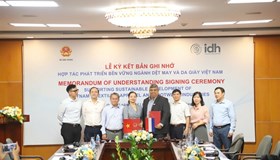 MoU on sustainable development for textiles and footwear signed
 Vietnam - UK cooperate for sustainable development
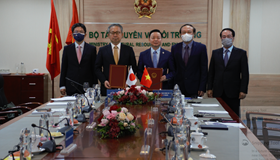 Vietnam, Japan sign a Memorandum of Understanding on low-carbon growth
 Increasing solutions in response to climate change
 Realizing vision towards sustainable green agriculture development
 WWF-Vietnam calls to reduce plastic waste
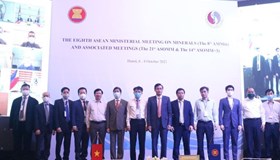 Promoting ASEAN cooperation towards sustainable development of mineral exploitation
 Developing forests in coastal areas in response to climate change