Developing coal-fired thermal power plants using clean technologies: to be no longer a “challenge”
Developing coal-fired thermal power plants applying clean technology is a crucial part of many nations’ energy policies. Thanks to low-price input materials and high capacity, coal-fired thermal power plants have solved the “problem” of energy security for many countries, particularly developing ones.
Global trend in clean technology
In developed countries like the United States, Japan, EU member countries..., from the 1950-1960s of the last century, coal thermal power accounted for a high proportion in the power structure. From the end of the twentieth century to the beginning of the 21st century, the amount of coal thermal power represented more than 60% of the global electricity output. Up to now, in spite of its decreasing proportion, coal thermal power has still made up for 35% -40% showing the importance of this power source.
In Asia, high economic growth has lead to an increasing demand for electricity over the years. In this situation, coal thermal power has stood out as a cheap and abundant power source. However, the development of coal thermal power has faced many challenges, especially environmental ones. Therefore, if clean and environmentally-friendly technology is used, coal thermal power will be highly appreciated by the social community.
In Malaysia, which is a developing country in the Southeast Asia, coal thermal power is part of the energy resource diversification policy which is being pursued by the Government. Thanks to the specific coal thermal power development schedule, propaganda promotion and especially the advanced technology application, Malaysia finds it quite easy to develop coal thermal power now.
Manjung Complex, which is under TNB Company, situated in Perak State, Malaysia alone has four coal-fired power stations with the total capacity is 3,100 MW meeting electricity demand of more than 20% of population. In particular, the Manjung 4 coal-fired power plant, whose capacity is 1,000MW, is the first plant in the South East Asia to use supercritical technology. As a result, the amount of greenhouse gas emissions resulting from the plan is 10% lower than the world's average one, according to the World Bank's assessment results.
The Manjung 4 coal-fired power plant is the first plant in the South East Asia to use supercritical technology
What about Vietnam?
In the Adjusted Power Master Plan VII, along with thermal power, renewable energy is prioritized for development by the Vietnamese Government with an increasingly higher proportion in the source structure. For coal-fired thermal power alone, the total capacity up to 2030 is approximately 55,300MW in expectation, accounting for about 53.2% of the total power capacity generated by the whole system (with the consumption of about 129 million ton of coal).
Though there are various opinions but in fact, in order to meet the power growth rate of about 10%/year and ensure the nation’s energy security in the current situation, to develop coal-fired thermal power in Vietnam is necessary. According to experts, “refusing” coal-fired thermal power means Vietnam is about to face power shortages in the coming years as our potential of hydropower is used up and renewable energy requires a too high investment rate while the application possibility is still limited. “The key point is that we seek to invest in coal-fired thermal power plants applying clean and eco-friendly technologies,” Affirmed Mr. Tran Viet Ngai – Chairman of Vietnam Energy Association.
Many of Vietnam’s coal-fired power plants, particularly the ones owned by EVN, have been applying advanced technologies which are at the same level as those in the region and the world as well, properly meeting the environmental requirements. In which, some plants have applied supercritical technology (SC) and technology of carbon emission reduction, typically Power Plants of Vinh Tan 4, Expansion Vinh Tan 4, Expansion Duyen Hai 3, etc. Also, the previously-invested thermal plants are equipped with exhaust treatment systems, upgraded equipment lines in order to reduce impacts on the environment, at the same time promote the performance of the power units.
Many experts state that EVN has implemented the application of advanced technologies to its coal-fired thermal plants. At the Conference on developing coal-fired thermal power with high-efficiency and eco-friendly technologies in August 2018 between Vietnam Electricity and Japan Coal Energy Center (JCOAL), the latter’s representative highly appreciated the technologies applied by EVN to its coal-fired thermal plants. “However, technologies are developing constantly, from supercritical one to ultra supercritical one in the future, enabling the coal-fired thermal plants to operate more cleanly and properly. According to Dr. Sacha Parneix – Commercial General Director of GE’s Steam Power, Asian nations, including Vietnam, obviously can develop “super clean” coal-fired thermal power.
In the coming years, coal-fired thermal power is still expected to play an important role, ensuring the global energy security. Along with developing renewable energies, coal-fired thermal power development with clean technologies is the common trend of many countries throughout the world, including Vietnam. However, due to some stated problems such as more advanced technologies requiring for higher investment rate, mobilizing capitals is not an easy task, while the public opinion in general is still concerned about and pertain a strong “prejudice” against coal-fired thermal power. Thus, it is necessary to promote propaganda in order to reach public’s consensus, etc. If this “problem” is solved, developing coal-fired thermal power will be no longer a “challenge”.
In 2017 - The global economy consumed about 8 billion ton of coal (1.06 ton/person on average) - Vietnam consumed 54.6 million ton of coal (0.575 ton/person on average)
Forecast for 2035: - The consumption of primary energy sources (coal, oil, gas, uranium) of the world: 17.455 billion TOE (Ton of Oil Equivalent) - Total coal-fired thermal power capacity: 2500GW (Source: IEA) EVN has been managing 12 coal-fired thermal plants, in which: - Dust filtration: Most of the plants apply electrostatic precipitator technology (ESP) with high efficiency and filtration capacity. - Flue-gas desulphurization: Most of the plants apply desulphurization technology using limestone and seawater, assuring SOx emission limit in compliance with requirements by the National Technical Regulation on Emission of thermal power industry. - NOx treatment: Most of the plants apply the advanced Low-Nox technology. - Ash and slag: The ash and slag from the plants is verified by independent verifying units as normal industrial wastes, not hazardous ones. |
By Office of Cleaner Production and Sustainable Production and Consumption




.jpg?w=280&h=160&mode=crop) Dong Lam Cement Company strives towards green and sustainable production
Dong Lam Cement Company strives towards green and sustainable production
 Rang Dong company applies scientific and technological measures for sustainable development
 Better management crucial to reduce plastic waste
 Magnetic induction cooking can cut your kitchen’s carbon footprint
 ‘Everyone else does it, so I can too’: how the false consensus effect drives environmental damage
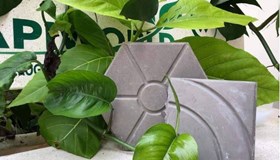 University students make bricks from plastic waste
 EU set to slightly surpass 2030 renewable energy goal, but funding boost needed
 How technology unlocks new value from the circular economy





.jpg?w=239&h=160&mode=crop)