

Monday, 21/09/2026 | 22:58 GMT+7


Thanh Vinh Coconut Processing Factory
19/02/2012
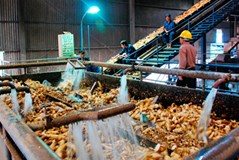
Thanh Vinh Coconut Processing Factory was established in 2005 with total capacity from 4,000 to 6,000 tons/year. The factory specializes in desiccated coconut for domestic market and export. The total employees of the factory is 130.
Before applying cleaner production, the factory had to face the problem of wastewater pollution. The wastewater derived from the processing workshop had BOD5 content (615 mg/l), COD content(870 mg/l) much higher than Vietnamese Standards (2008). Air emission from rice husk boiler also polluted the surroundings. To solve these problem, the factory had supports from Cleaner Production Component in Industry of Ministry of Industry and Trade.
With the support from Ben tre Department of Industry and Trade, in 2008, the factory carried out the cleaner production assessment. The factory established the cleaner production team led by Mr.Cu Van Thanh – Director of the factory - and 9 other members to carry out the cleaner production assessment on the whole of production line. The assessment of the production processes, the determination of waste streams, the balance of materials and energy were worked out. Then all data collected were used for analyzing to find out the cleaner production options for each production processes.
After the assessment and the determination of improving solution options, the factory conducted some house keeping options which required low cost and no cost with the total investment of 123 million dong. After stage 1, the factory saved 189 million dong. At stage 2, the factory took the initiative in big investment solutions to thoroughly solve the environmental problems, viz. Replacing existing steam traps by Steam gards; replacing steam boiler using husk by steam boiler using coconut shell; improving and upgrading workshops to satisfy the demand of the quality management system ISO 22.000: 2005; building wastewater treatment station. The financial benefits brought in by these solutions was 1.3 billion per year as the material consumption and environmental pollution were reduced.
The benefits brought in to the factory from cleaner production were detailed in the following:
| Technical benefit | Economic benefit | Environmental benefit |
| Stage 1 | ||
| Reducing 1.22% of the specific fresh coconut consumption | Saving 952 million dong | Reducing waste water Reducing the emission of solid waste Waste water reached standard level B after being treated Improving the working condition environment and the surrounding environment |
| Reducing 21.3% of the specific feed water consumption | Saving 31 million dong | |
| Reducing 18.3% s of the specific rice husk consumption | Saving 285 million dong | |
| Stage 2 | ||
| Reducing 0.82% of the specific fresh coconut consumption | Saving 593 - 860 million dong | |
| Reducing 23.75% of the specific feed water consumption | Saving 32- 46 million dong | |
| Reducing 18.26% s of the specific rice husk consumption | Saving 222 -322 million dong | |
The following is the typical cleaner production solutions of the factory:
| No. | Option | Investment | Performance | CP technique |
| 1 | Managing and controlling water consumption | 40 million dong | Saving 33 million dong Reducing 1.7m3 of water use/ton of product | GH |
| 2 | Using small flow taps | 5 million dong | Increasing water pressure for washing, reducing the volume of water use; reducing emission | EM |
| 3 | Using rubber brushes to collect solid waste before cleaning workshop ground | 1 million dong | Changing methods of cleaning; reducing the volume of water use for washing | EM |
| 4 | Improving nets at gas pits | 1 million dong | Saving 21 million dong Collecting 50kg of coconut scrap per day; making by-products for oil pressing; reducing solid waste emission | PC |
| 5 | Balancing the suction and blowing process in material drying system: suction fans can be changed | 40 million dong | Saving 135 million dong | PC |
| 6 | Improving rice hush conveyor belt to prevent the spilling | 6.5 million dong | Reducing the loss of rice husk during conveying; the loss reduced 95% after improving the convey belt. | EM |
| 7 | Recovering and recycling the maximum amount of condensate and flash steam | 8 million dong | Reducing the heat loss from condensate steam- reducing the rice husk for the boiler | OR |
| 8 | Replacing existing steam traps by Steam gards | 399 million dong | Saving 315 million dong/year | EM |
| 9 | Replacing steam boiler using husk by steam boiler using coconut shell | 2.6 billion dong | Saving 1 billion dong/year | EM |
| 10 | Constructing waste water treatment station | 1.5 billion dong | Treated Waste water quality is under standard limits | EOP |
Remarks: GH: Good Housekeeping, EM: Equipment Modification; OR: Onsite Recovery, EOP: End-of-pipe
Being aware of the benefits from the cleaner production, the company decided to maintain the operation of the cleaner production team, and put the cleaner production activities into the general management system of the company. To do this, a simple environment management system was established. Also, the company made an environmental policy which stipulates the strict implementation of the Law of Environmental Protection and regulations to ensure the sustainable development and minimize the causes of waste. Besides, the company integrated the production management system and the environmental management system so that the consumption of materials and energy were controlled by monitoring the criteria in waste streams. A system of sampling and legal procedure was also built to be applied in collecting, checking, and analyzing environmental data.
An environmental monitoring plan has been conducted. It aims to monitor the considerable improvements brought in by the cleaner production options, and to adjust them in case some environmental benefits are reduced. The environmental monitoring system comprises air monitoring and waste water monitoring.
Cleaner Production not only brings in benefits from energy saving, emission reduction, water consumption reduction, but also helps the company to develop production, improve product quality, and affirm the company reputation. The cleaner production options which have been implemented at the company are typical examples for coconut processing factories in Vietnam./.
 TNG constantly innovates to ensure sustainable development
 IBM sets new climate goal for 2030
 Six EU countries lead push for clean hydrogen support
 California trash-to-hydrogen plant promises dirt-cheap, super-green H2
 Nokia’s liquid-cooled 5G base station cuts CO2 emissions by 80%
 UN Environmental Programme Awards Asian Entrepreneurs For Post Covid-19 Green Business Solutions
 Energy audit result of Viet Thang Corporation - JSC
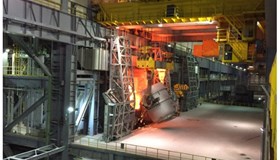 Energy audit result of Formosa Ha Tinh Steel Corporation